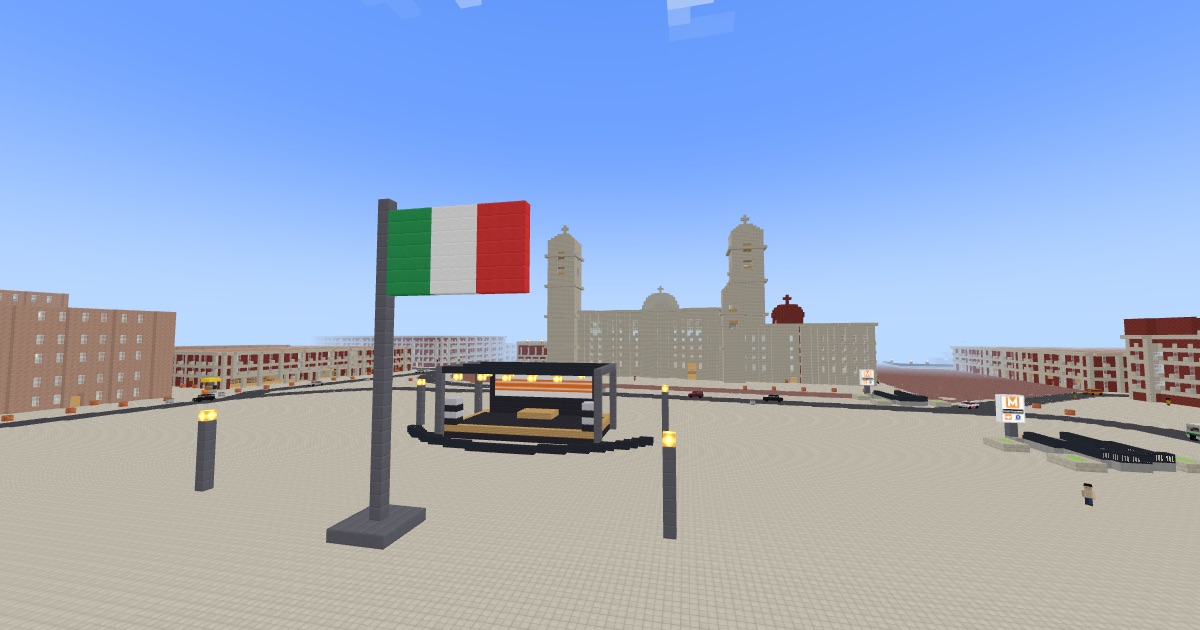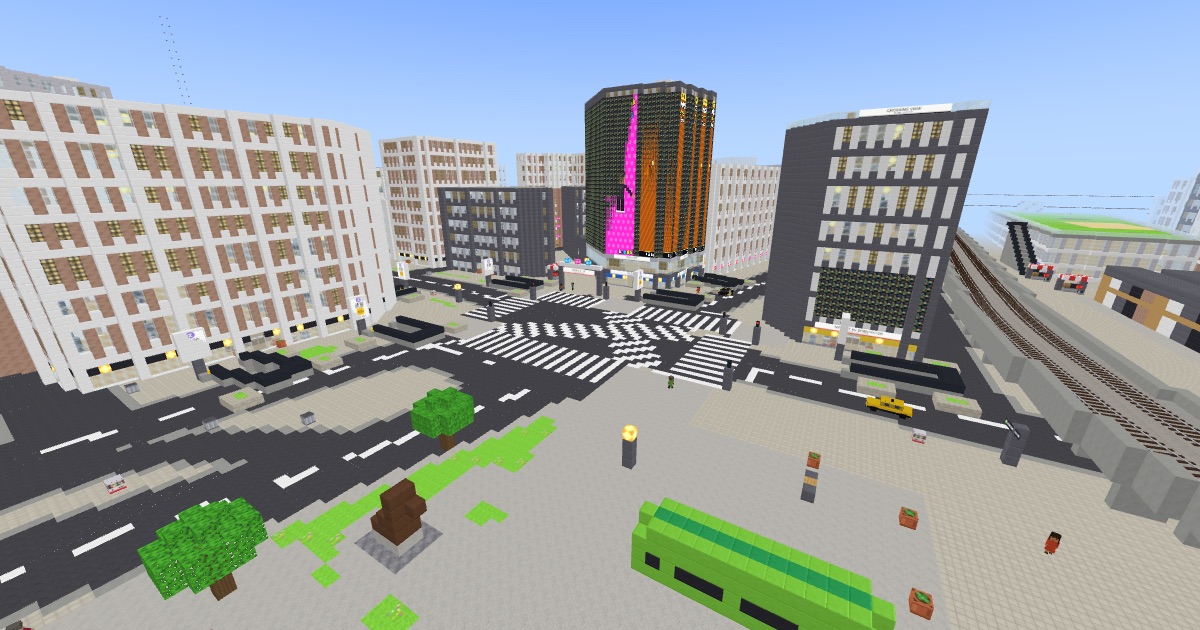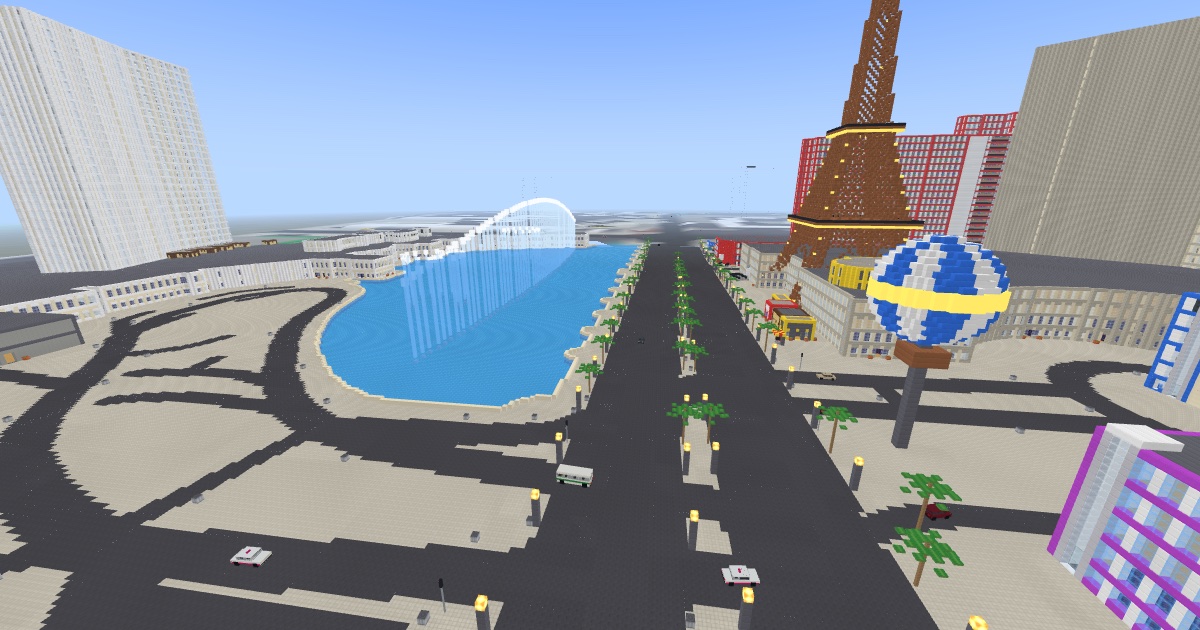
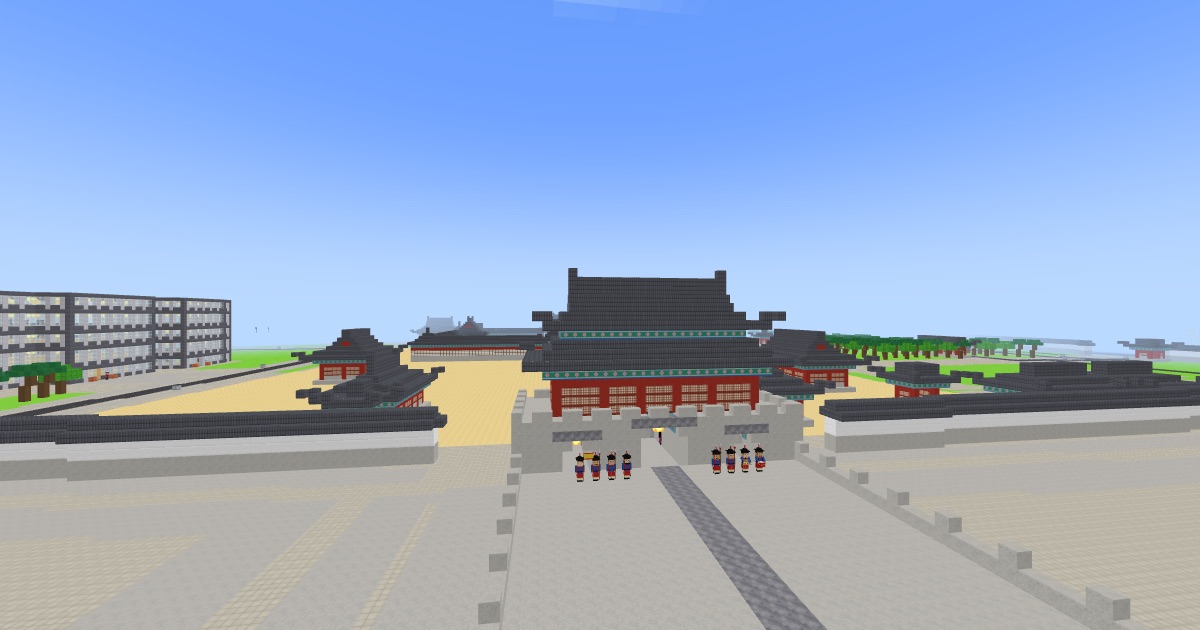
Gwanghwamun is the main gate of Gyeongbokgung, the great palace of the Joseon dynasty in Seoul, and in front of it lies Gwanghwamun Square, the city's ceremonial axis. In CreaKubos the whole axis, from the Gyeonghoeru pond to Cheonggye Plaza, more than a kilometre, is rebuilt in blocks from OpenStreetMap and from photographs of the real buildings.
What you will find
- Gwanghwamun gate on its granite base with three passages, the woldae terrace and the two haetae statues; the changing of the royal guard ceremony takes place in front of it.
- Inside the palace: Heungnyemun gate, Yeongjegyo bridge over the stream, Geunjeongmun and the throne hall Geunjeongjeon on its double terrace, with the throne before the screen of the Sun, the Moon and the Five Peaks.
- The Gyeonghoeru pavilion on 48 pillars in its pond, and the Dongsipjagak corner tower.
- Gwanghwamun Square with the golden statue of King Sejong, creator of the hangul alphabet, and the statue of Admiral Yi Sun-sin with his turtle ship, the fountain and Cheonggye Plaza.
- The subway: Line 5 (Gwanghwamun station) and Line 3 (Gyeongbokgung station), with signs in Korean like the real ones, and Bugaksan mountain to the north.
- Underground, a mine and the old royal ice store, the Seokbinggo.
How to play
Explore the palace, ride the subway and build whatever you like: the buildings can be changed and only the subway is protected. On a computer, WASD to move, the mouse to look, Space to jump, F to fly and 1-9 to pick a block; left click breaks and right click places. On a phone, a touch stick, drag to look, tap to place and hold ⛏ to break.
CreaKubos is free, runs in the browser with no download and works on iPhone and Android phones, with the interface in nine languages, Korean included.
En español
Gwanghwamun y el palacio Gyeongbokgung de Seúl en bloques, gratis en tu navegador. La puerta Gwanghwamun con la ceremonia de la guardia real, el salón del trono Geunjeongjeon, el pabellón Gyeonghoeru, la plaza con las estatuas del Rey Sejong y del almirante Yi Sun-sin, y las líneas 3 y 5 del metro, reconstruidos a partir de OpenStreetMap. Sin descargas. Lee esta página en español.